
Termite Inspection & Control in Roseville, CA
Termite inspection and control in Roseville starts with identifying whether you have subterranean or drywood termites, because each needs a different treatment.
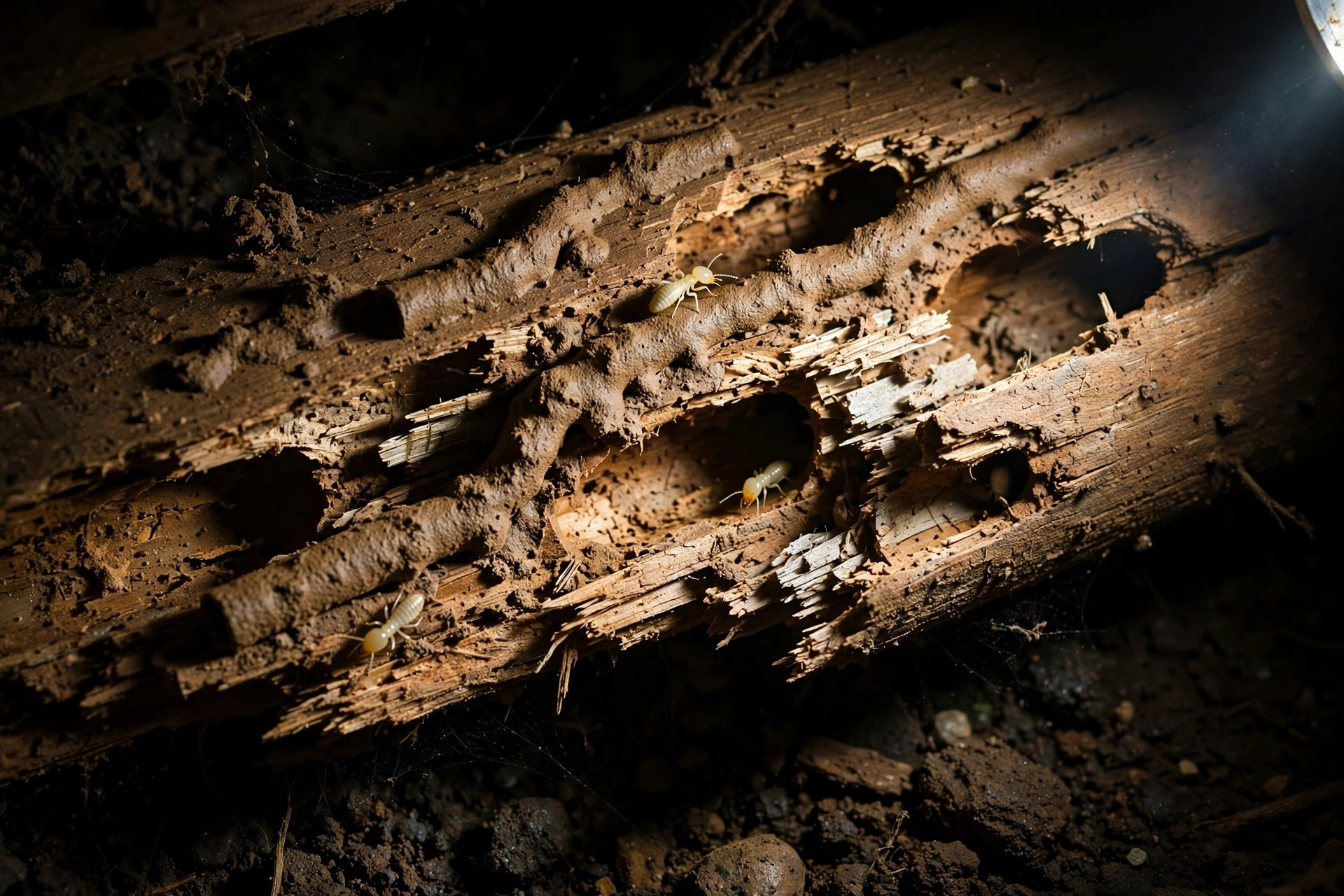
Termites are the quietest and most expensive pest a Roseville homeowner will ever face. They work inside walls, floors and framing — often for years — before the damage becomes visible. Pest Control Pros provides termite inspections and control for both termite types active in Placer County: Western subterranean termites that attack from the soil, and drywood termites that live inside the wood itself. Our guide to subterranean vs drywood termites shows how to tell them apart.
Our termite service starts with a documented inspection of the foundation, crawl space, attic, eaves and all wood-to-ground contact points. If activity is found, we show you exactly where, explain the treatment options in plain language, and quote the work before anything begins.
What Are the Signs of Termites in a Roseville Home?
The signs of termites in a Roseville home are mud tubes, frass pellets, shed wings, hollow-sounding wood and sticking doors or windows.
- Mud tubes running up the foundation, garage walls or inside the crawl space
- Small piles of hard, wood-colored pellets (frass) under windows, eaves or furniture
- Wings shed near windows or doors in spring — a swarm has happened nearby
- Wood that sounds hollow when tapped, or paint that bubbles with no water leak
- Doors or windows that suddenly stick as framing shifts
- You are buying, selling or refinancing a Roseville home
What Does Termite Inspection and Control Include?
Termite inspection and control includes a documented inspection, species identification, a treatment plan and a written report.
- Documented inspection of foundation, crawl space, attic, eaves and garage
- Identification of subterranean vs. drywood termite activity — treatment differs
- Checks for moisture conditions and wood-to-ground contact that invite termites
- Treatment plan matched to the species and the extent of activity
- Recommendations for repairs and for preventing re-infestation
- Clear written report you can use for real-estate transactions
We choose the treatment method according to the condition we find at your property, and use the most effective option for that situation.
Which Termites Live in Roseville?
Two termites live in Roseville: the western subterranean termite and the western drywood termite. Subterranean termites need soil moisture and build mud tubes to travel into your home — Roseville's irrigated landscaping and mulch beds against foundations give them ideal conditions, especially in established neighborhoods like Woodcreek Oaks and Diamond Oaks. Drywood termites need no soil at all; they colonize eaves, window frames and attic wood, and are common in older homes around Downtown Roseville. Treating one like the other wastes money. Correct identification is the whole game, which is why our termite service always starts with inspection, not a sales pitch.
How Much Does Termite Treatment Cost in Roseville?
The cost of termite treatment in Roseville depends on the species, the extent of activity and the size of the home. The main price factors:
- Species involved — localized drywood treatment and whole-structure subterranean treatment are priced very differently
- Extent and location of activity found during inspection
- Size of the home and accessibility of crawl space and attic
- Whether structural repairs to damaged wood are needed after treatment
- Preventive monitoring or warranty options you choose
Call (916) 312-1203 and we will quote your specific job clearly before work begins.
Can You Treat Termites Yourself?
No, DIY products do not reach termite colonies. Store-bought termite stakes and sprays do not reach a subterranean colony or drywood termites sealed inside framing. Worse, they can mask the visible signs while the colony keeps feeding. Termite work in California is regulated for a reason: correct species ID, correct product placement, and documentation matter — especially if you ever sell the home and must disclose treatment history.
When Are Termites Most Active in Roseville?
Termites are active in Roseville all year, with visible swarms in spring and fall. Western subterranean termites swarm on warm days in spring and after the first fall rains, when winged reproductives leave to start new colonies — shed wings near windows are a classic Roseville warning. Feeding, however, happens all year underground. Drywood termites swarm in late summer and fall and push frass out of infested wood during warm months. The practical takeaway: you can find termite evidence in any month, and inspections are worthwhile year-round, with spring being the highest-value window.
What Happens If Termites Go Untreated?
Untreated termites hollow out sill plates, joists and studs while the surface looks normal. Homeowners insurance almost never covers termite damage, because insurers treat it as preventable maintenance. In Roseville's wood-frame homes, subterranean colonies can hollow out sill plates, floor joists and wall studs while the surface looks perfect. Drywood termites compromise eaves, fascia and window frames. Beyond repair costs, undisclosed termite history complicates home sales, which is why documented inspection and treatment records genuinely protect your home's value.
How Do You Prevent Termites in Roseville?
To prevent termites, keep wood away from soil and keep the foundation dry.
- Keep all wood — fences, planters, firewood, deck posts — from direct soil contact where possible
- Pull mulch back at least 6 inches from the foundation and keep it below the weep screed
- Fix leaks and grade soil so water drains away from the foundation, not toward it
- Point sprinklers away from the house and avoid irrigation against walls
- Store firewood off the ground and away from the house, and inspect it before bringing it indoors
- Have eaves and fascia painted and sealed — drywood termites enter through tiny exposed-wood cracks
- Schedule a termite inspection once a year in Placer County
Termite Myths Roseville Homeowners Believe
Myth: My home has a concrete slab, so termites can't get in.
Fact: Subterranean termites travel through hairline slab cracks, expansion joints and plumbing penetrations. Slab homes in Roseville get termites regularly.
Myth: Termites only attack old homes.
Fact: Colonies do not check the year built. New homes near disturbed soil and landscaping are colonized too — sometimes within the first few years.
Myth: If the previous owner treated for termites, I'm covered forever.
Fact: Treatments age, soil barriers get disturbed by landscaping and plumbing work, and drywood termites fly in from outside entirely. Past treatment is not permanent immunity.
How Do You Prepare for a Termite Inspection?
- Clear items away from foundation walls inside the garage and crawl space access
- Make attic access reachable — drywood evidence often shows in eaves and attic framing
- Note any spots where you have seen wings, pellets or mud tubes, and do not clean them away before we arrive
- Keep pets clear of crawl space and attic openings during the visit
- Have any prior termite reports or treatment records available if you have them
Termite Control Across Roseville Neighborhoods
We provide termite inspection & control throughout Roseville, including Westpark · Woodcreek Oaks · Sun City Roseville · Diamond Oaks · Downtown Roseville. Each neighborhood has its own pest pattern — read the area pages for the local detail.
Related Services and Guides
Pest Inspection in Roseville
Find the pest, the entry points and the conditions before paying for treatment.
Rodent Control and Exclusion
Roof rat and mouse trapping, then sealing every roofline and ground-level gap.
Frequently Asked Questions
Subterranean termites leave mud tubes on foundations and need soil contact. Drywood termites leave small hard pellets (frass) below infested wood and shed wings near windows. Our inspection identifies the species because the treatment for each is different.
It depends on species, extent of activity and home size — which is why we inspect first and quote the exact work in writing. Call (916) 312-1203 to schedule an inspection.
Yes. Placer County has steady subterranean and drywood termite pressure, helped by irrigated landscaping, warm summers and plenty of wood-frame construction.
California transactions commonly include a wood-destroying organism inspection, and lenders may require clearance. A documented inspection protects both sides of the sale.
We show you the evidence, explain treatment options and costs, and prioritize what must be done now. Nothing proceeds without your approval.
They can try — which is why we also fix the conditions that invited them, like wood-to-ground contact and excess moisture, and offer monitoring options.