
Mud Tubes on Your Foundation: What to Do in the First 48 Hours
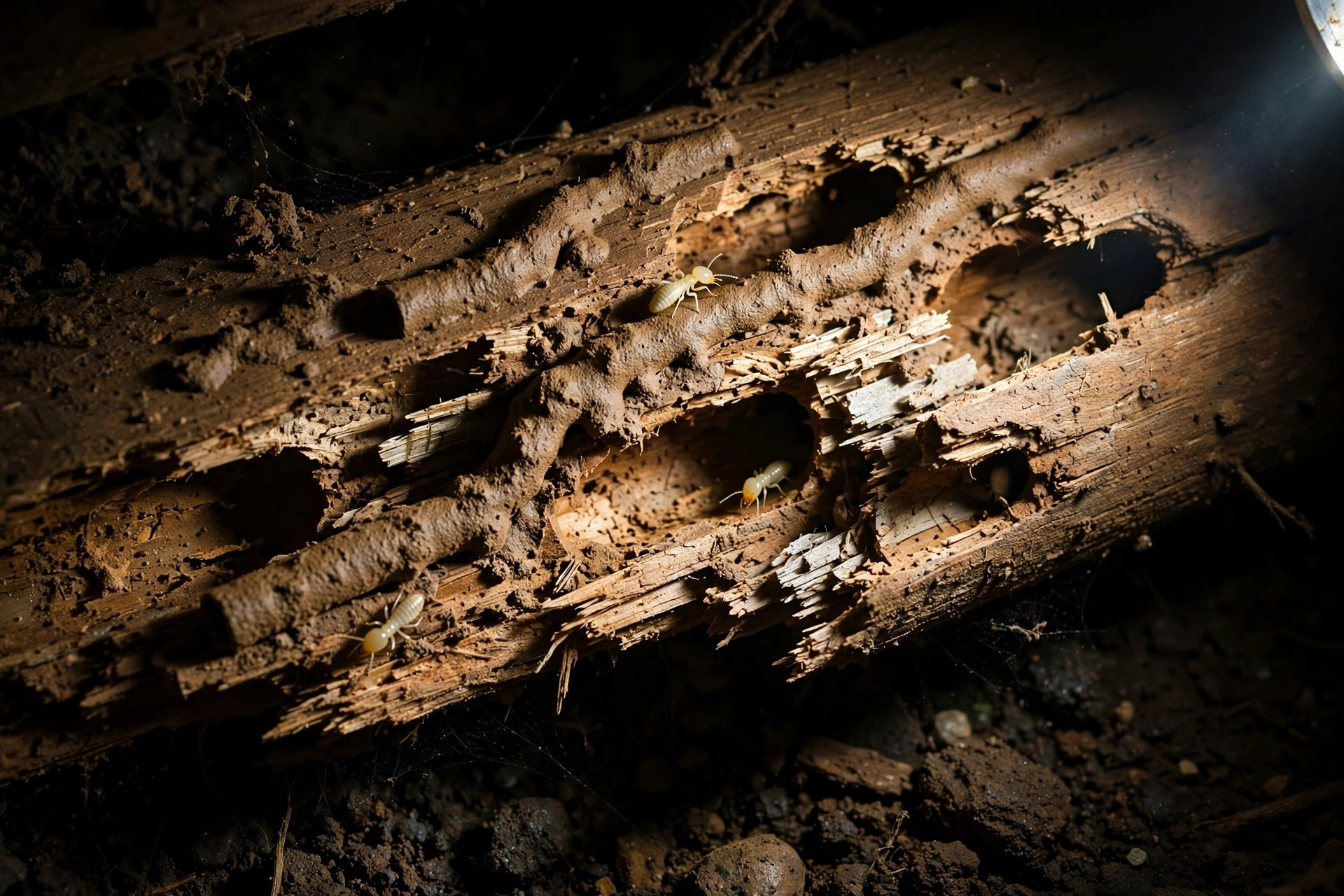
Mud tubes on a foundation are tunnels built by subterranean termites to travel between the soil and the wood of your home. They are a Section 1 finding in a California termite report. Finding them is not an emergency measured in hours, but it is a reason to book a termite inspection within days.
What Are Termite Mud Tubes?
Termite mud tubes are pencil-width tunnels, about 1/4 to 1 inch wide, made of soil, wood particles and saliva. Subterranean termites dry out quickly in open air, so the tubes keep them humid and hidden while they move. Tubes run up foundation walls, crawl-space piers, plumbing lines and the inside of garage walls.
Are the Mud Tubes Active?
To check whether mud tubes are active, look for moisture and live termites without destroying the tube. Active tubes are darker and slightly damp; abandoned tubes are pale, dry and crumble at a touch. An inspector confirms activity by opening a small section and watching for termites or for repair within a few days.
What Should You Do in the First 48 Hours?
To handle mud tubes in the first 48 hours, follow six steps:
- Photograph each tube with something for scale, such as a coin.
- Mark the locations on a simple sketch of the house.
- Leave the tubes intact; scraping them off removes the evidence.
- Skip store-bought sprays; they kill a few workers and miss the colony.
- Check nearby wood with a screwdriver for soft or hollow spots.
- Book a termite inspection and share your photos.
How Fast Do Termites Damage a House?
Termites damage a house slowly; serious structural damage from a western subterranean colony usually takes years, not weeks. That pace gives you time to get a proper inspection and compare treatment options. It does not justify waiting a season, because every month adds repair cost to the joists and sill plates the colony is feeding on.
What Conditions Attract Subterranean Termites?
Subterranean termites are attracted to moist soil in contact with wood. In Roseville, the common conditions are:
- Irrigation overspray wetting the foundation and siding.
- Soil or mulch piled above the foundation line.
- Wood fence posts, deck posts and form boards touching soil.
- Leaking hose bibs and plumbing in the crawl space.
A WDO report lists these as Section 2 conditions. The difference between subterranean and drywood termites explains why drywood colonies are not affected by these soil fixes.
Frequently Asked Questions
No, leave mud tubes intact until an inspector sees them. Breaking them removes evidence, and termites rebuild active tubes within days.
No, spraying tubes with retail insecticide does not reach the colony in the soil. Effective treatment is a soil termiticide barrier or a bait system applied by a licensed operator.
Related Roseville Pest Guides
Subterranean vs Drywood Termites in Placer County
Mud tubes or frass? How to tell Roseville's two termite threats apart.
Pest Inspection for Home Buyers in Roseville, CA
The termite, rodent and moisture findings sellers hope you will not look for.
What Does a Pest Inspection Include? The Full Checklist
Attic to crawl space: every stop on a professional Roseville pest inspection.